
Logistic Growth Explained: A Quick Guide to Understanding Natural Limits
Growth is everywhere—in nature, in business, in personal development. But here’s what most people get wrong: not all growth is created equal. While we often imagine exponential expansion, the reality is far more nuanced. Logistic growth is the pattern that governs most real-world systems, from population dynamics to personal skill development. Understanding this concept transforms how you approach personal growth and goal achievement.
Unlike exponential growth that accelerates indefinitely, logistic growth follows a natural S-curve—starting slow, accelerating dramatically, then plateauing as it approaches environmental or resource limits. This isn’t failure; it’s maturity. Whether you’re building a business, developing expertise, or transforming your life, recognizing where you are on the logistic curve determines your strategy. In this guide, we’ll explore the mechanics, real-world applications, and how to leverage this understanding for sustainable progress.
What is Logistic Growth Definition
Logistic growth is a model of population or system growth that begins exponentially but slows as it approaches the carrying capacity—the maximum size that an environment can sustain. Mathematically, it’s described by the logistic equation, which incorporates a limiting factor that exponential models ignore.
The carrying capacity represents environmental constraints: limited resources, space, nutrients, or market saturation. When a population is small relative to carrying capacity, growth accelerates. As it approaches the limit, growth decelerates. The result is the characteristic S-shaped or sigmoid curve that appears across biology, economics, and human behavior.
This concept, developed by Belgian mathematician Pierre François Verhulst in 1838, has become foundational to understanding sustainable systems. Unlike the alarming predictions of exponential models, logistic growth acknowledges reality: systems self-regulate.
In practical terms, recognizing how to navigate growth phases means understanding that slowdown isn’t stagnation—it’s equilibrium. Your career trajectory, fitness gains, business expansion, and learning curves all follow logistic patterns. The key is identifying which phase you’re in and adjusting your approach accordingly.
The Three Phases of Logistic Growth
The logistic growth curve divides into three distinct phases, each with unique characteristics and challenges:
Phase 1: Lag Phase (Slow Initial Growth)
Initially, growth appears almost imperceptible. When a business launches, a skill develops, or a population colonizes new territory, progress seems glacial. This phase tests patience and commitment. Resources are being allocated to establishing infrastructure, learning fundamentals, and building foundations. Growth rate is low because the population or system is small and hasn’t optimized processes yet.
In personal development, this resembles the first weeks of a fitness regimen or learning a new language. You’re not seeing dramatic results, but critical adaptations are occurring internally. Your body is adjusting, neural pathways are forming, systems are initializing. Many people abandon efforts during this phase, mistaking slow progress for ineffectiveness.
Phase 2: Exponential Phase (Rapid Acceleration)
Once foundations are established, growth accelerates dramatically. This is the exhilarating phase where effort compounds. In business, revenue multiplies. In fitness, strength gains become visible monthly. In learning, competence suddenly feels achievable. This phase feels magical because progress is tangible and momentum builds naturally.
This is when cultivating the right mindset becomes crucial. The exponential phase tempts overconfidence. Many people believe this pace will continue indefinitely, leading to burnout or unrealistic expectations when deceleration inevitably arrives.
Phase 3: Plateau Phase (Deceleration and Equilibrium)
As resources become limited or markets saturate, growth slows. This phase is often misinterpreted as failure. In reality, it represents maturity. A business reaches market saturation. An athlete’s personal records plateau. Your learning curve flattens as you approach mastery. Growth still occurs, but incrementally rather than exponentially.
The plateau phase requires strategic shifts. You cannot indefinitely accelerate using phase-two tactics. New approaches—market expansion, process innovation, skill specialization—become necessary. Understanding this prevents the demoralization that accompanies deceleration.
Logistic Growth vs Exponential Growth
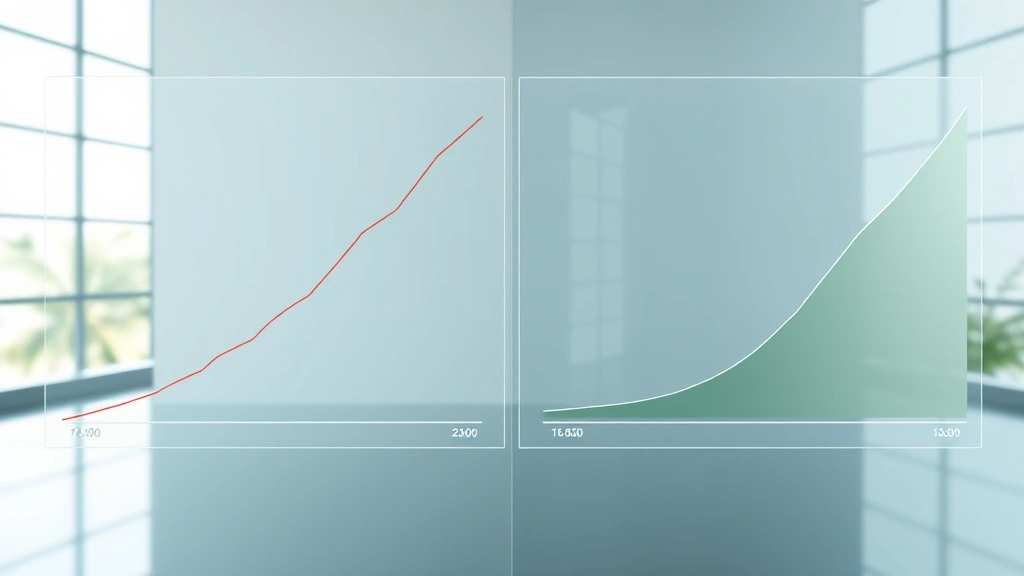
The distinction between logistic and exponential growth is critical for realistic planning. Exponential growth assumes unlimited resources and no limiting factors. It’s the hockey-stick curve: imperceptible initially, then vertical. It’s seductive because it promises unlimited expansion. Bacteria in a petri dish with infinite nutrients would grow exponentially. Compound interest, if time were infinite, would too.
But reality imposes constraints. Logistic growth incorporates these limits from the start. It’s more pessimistic about infinite expansion but far more accurate for real systems. The formula includes a feedback mechanism: as the population approaches carrying capacity, growth rate decreases proportionally.
Consider business revenue projections. Exponential models predict that a company growing 50% annually will continue indefinitely. Logistic models recognize market saturation, competitive pressure, and operational limits that eventually decelerate growth. Which prediction proves more reliable?
Psychologically, understanding this distinction prevents disappointment. When exponential growth expectations meet logistic reality, people feel they’ve failed. In truth, they’ve simply encountered the natural limits of their system. Sustaining motivation requires realistic expectations aligned with logistic patterns.

Real World Applications of Logistic Growth
Logistic growth appears across seemingly unrelated domains, revealing universal patterns in how systems evolve:
Population Biology
Wildlife populations follow logistic curves precisely. A reintroduced species grows slowly initially, accelerates as population rebuilds, then stabilizes at carrying capacity determined by available habitat and food. Understanding this prevents both overhunting and misguided conservation efforts that ignore natural equilibrium.
Technology Adoption
New technologies follow predictable S-curves. Smartphones, social media platforms, and streaming services all exhibited slow early adoption, explosive growth, then plateau as market saturation approached. McKinsey research on S-curves demonstrates this pattern across industries, helping companies anticipate market phases and adjust strategies accordingly.
Business Growth
Startups rarely sustain early growth rates. A company doubling revenue annually for five years will not double in year six. Understanding logistic patterns helps founders transition from growth-at-all-costs mentality to sustainable scaling. Strategic goal setting acknowledges these natural phases.
Pandemic Spread
COVID-19 initially spread exponentially, alarming epidemiologists. But as populations developed immunity and behavior changed, spread decelerated, following logistic patterns. Epidemiologists use logistic models to predict when healthcare systems will face peak demand—critical for resource allocation.
Skill Development
Learning curves are logistic. Beginners improve rapidly as they internalize fundamentals. Intermediate practitioners see slower progress—they’re competing for increasingly marginal gains. Elite performers improve incrementally. Understanding this prevents frustration when progress slows and guides realistic timelines for mastery.
Environmental Carrying Capacity
Research in Nature Climate Change documents how Earth’s carrying capacity for human civilization is finite, determined by renewable resources, waste absorption, and ecosystem services. Logistic growth principles explain why indefinite expansion on a finite planet is impossible—a sobering but necessary perspective.
Applying Logistic Growth to Personal Development
Your personal development journey follows logistic patterns. Recognizing this transforms how you approach growth strategy and self-improvement.
Career Progression
Your early career often shows rapid advancement as you climb from entry-level to mid-management. But reaching senior leadership typically involves slower progress—fewer positions available, higher competition, steeper skill requirements. This isn’t stagnation; it’s logistic equilibrium. Successful professionals adapt strategies: specialization, leadership development, or lateral moves into emerging fields.
Fitness and Athletic Performance
Beginners transform their bodies in months. After a year of consistent training, progress slows. After five years, personal records improve by fractions. This frustrates many athletes, but it’s natural. You’re approaching your physiological carrying capacity—limited by genetics, recovery capacity, and time investment. Progress requires increasingly sophisticated methods: periodization, sport-specific conditioning, mental performance coaching.
Financial Wealth Building
Wealth accumulation accelerates through compound returns—the exponential phase. But even compound growth eventually decelerates as your investable assets approach their carrying capacity (limited by income, living expenses, and investment opportunities). Mature wealth builders shift focus to preservation, tax optimization, and legacy planning rather than continued exponential expansion.
Learning and Expertise
Your learning curve in any domain is logistic. Initial skill acquisition happens quickly—you’re absorbing basics. Intermediate competence requires sustained effort for marginal gains. Expertise demands decades of deliberate practice. Accepting this prevents discouragement and guides realistic timelines. A language learner might reach conversational fluency in a year but require five years for professional proficiency.
Overcoming the Plateau Phase
The plateau phase is where most people struggle. Understanding logistic growth helps you navigate it strategically rather than emotionally:
Recognize the Phase
First, identify that you’re genuinely plateauing rather than stagnating. Are you still making small improvements? Are systems still functioning? Plateauing is healthy maturity. Stagnation is dysfunction. The distinction matters for your response.
Expand Your Carrying Capacity
You can increase carrying capacity through strategic changes. A business can expand geographically, diversify products, or enter new markets. An athlete can move to a higher competition level. A professional can develop complementary skills. These aren’t failures—they’re phase transitions that enable continued growth.
Shift from Growth to Optimization
During plateau phases, optimize rather than expand. Improve efficiency, quality, and profitability rather than chasing growth metrics. A mature business focuses on margins rather than revenue. An established professional focuses on impact rather than advancement. This reframing acknowledges that value creation continues even as growth rate decelerates.
Pursue Mastery Over Growth
Logistic growth eventually plateaus, but mastery has no ceiling. A plateaued performer can deepen expertise, mentor others, innovate within their domain, or contribute to their field’s advancement. This shift from quantitative growth to qualitative mastery is psychologically liberating and often more fulfilling.
Anticipate and Plan for Phases
Rather than reacting to phases, anticipate them. If you’re in exponential phase, prepare psychologically and strategically for deceleration. Build systems that work during plateau. Develop new skills during maturity phases. Proactive planning reduces the shock when growth patterns shift.
FAQ
What is the carrying capacity in logistic growth?
Carrying capacity is the maximum population or system size that an environment can sustain indefinitely, determined by available resources, space, and constraints. It’s the asymptote that the logistic curve approaches but never quite reaches.
Why does logistic growth plateau?
Growth plateaus because limiting factors become increasingly restrictive as systems expand. Resources per unit decline, competition intensifies, and regulatory or environmental constraints tighten. The system reaches equilibrium where births/growth equals deaths/constraints.
Can you exceed carrying capacity?
Temporarily, yes—but with consequences. Populations can overshoot carrying capacity, then crash when resources deplete. Businesses can overexpand, then contract during corrections. Understanding limits prevents destructive overshooting.
How do I know which phase of logistic growth I’m in?
Analyze your growth rate. Lag phase shows minimal progress despite effort. Exponential phase shows accelerating results with compounding returns. Plateau phase shows consistent but decelerating improvement. Your growth trajectory’s shape reveals your phase.
Is logistic growth always S-shaped?
In ideal conditions, yes. But real systems often show variations: multiple growth phases, temporary crashes, or irregular patterns. However, the fundamental pattern—limited growth approaching a ceiling—remains consistent across most natural and human systems.
How does logistic growth apply to personal development?
Your skills, career, fitness, and wealth follow logistic patterns. Early development accelerates, mid-career progress slows, and mastery plateaus. Understanding this prevents discouragement and guides realistic strategy adjustments at each phase.
Can I increase my carrying capacity?
Yes. Individuals increase carrying capacity through education, skill development, network expansion, and strategic positioning. Businesses expand capacity through market expansion, innovation, and operational efficiency. The carrying capacity isn’t fixed—it responds to strategic interventions.


