
Logistic Growth Explained: Biologist’s Insights Into Natural Expansion Patterns
Growth isn’t always linear. Whether you’re observing a bacterial colony, a wildlife population, or even your own personal growth trajectory, the pattern of expansion follows predictable mathematical principles that biologists have studied for centuries. Logistic growth represents one of nature’s most elegant solutions to a fundamental problem: how organisms expand when resources are finite.
Understanding logistic growth transforms how we perceive progress, sustainability, and real-world limitations. Unlike exponential growth that continues indefinitely (a mathematical fantasy), logistic growth acknowledges reality—that every system encounters constraints, carrying capacities, and environmental boundaries. This concept applies far beyond laboratory settings, influencing everything from business growth strategies to personal development timelines.
As a biologist examining population dynamics, I’ve observed these patterns repeatedly in nature. The S-shaped curve of logistic growth tells a story about adaptation, limitation, and sustainable expansion. Let’s explore what this means for understanding growth in any context.
Define Logistic Growth: The Foundation
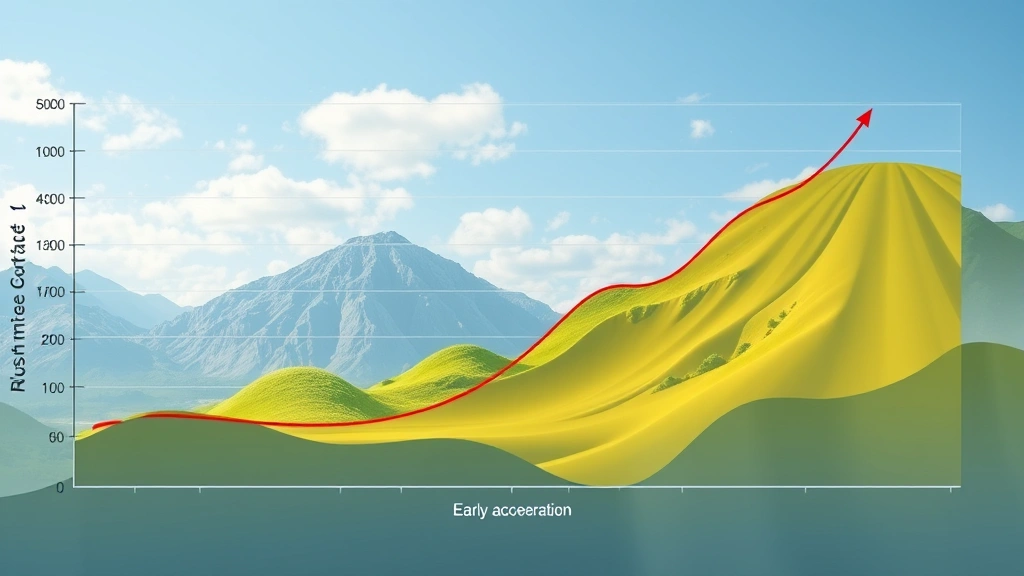
Logistic growth is a population growth model that describes how a population expands rapidly at first, then slows as it approaches the environment’s carrying capacity. The term comes from the logistic function, a mathematical equation that produces the characteristic S-shaped curve (sigmoid curve) when graphed over time.
At its core, logistic growth answers a critical question: what happens when a growing population encounters finite resources? Unlike theoretical exponential models, logistic growth incorporates reality. It assumes that as populations increase, competition for resources intensifies, reproduction rates decline, and mortality rates increase—ultimately stabilizing the population at a sustainable level.
The logistic growth model was first developed by Pierre-François Verhulst in 1838, a Belgian mathematician who recognized that populations couldn’t grow infinitely. His mathematical framework has become fundamental to ecology, epidemiology, economics, and organizational development.
When we define horizontal growth strategies or examine customer-led growth models, we’re often dealing with logistic principles—sustainable expansion within market constraints rather than unlimited scaling.
The Three Phases of Logistic Growth
The logistic growth curve consists of three distinct phases, each characterized by different growth rates and population dynamics:
- Lag Phase (Initial Slow Growth): When organisms first enter an environment, growth appears minimal. Populations must adapt to new conditions, establish viable populations, and overcome initial challenges. This phase involves low reproduction rates relative to the population size. Think of introducing a new species to a habitat—it takes time for the population to stabilize and begin meaningful expansion.
- Exponential Phase (Rapid Acceleration): Once organisms adapt successfully, growth accelerates dramatically. Resources are abundant, competition is minimal, and reproduction rates peak. This is when you see the steepest part of the S-curve. The population doubles repeatedly, limited primarily by biological reproduction rates rather than environmental constraints. This phase is deceptive because it suggests unlimited growth is possible.
- Plateau Phase (Stationary Stage): As the population approaches carrying capacity, growth slows significantly. Resources become scarce, competition intensifies, waste accumulation increases, and disease prevalence may rise. The growth curve flattens as the population stabilizes around the carrying capacity. Birth rates and death rates approach equilibrium, creating a sustainable but stable population level.
Understanding these phases helps predict when growth will accelerate, when it will plateau, and what interventions might extend or modify each phase. In growth mindset development, recognizing which phase you’re in determines your strategy and expectations.
Mathematical Model and Real-World Application
The logistic growth equation is elegantly simple yet powerful: dP/dt = rP(1 – P/K), where P represents population size, t is time, r is the intrinsic growth rate, and K is the carrying capacity.
This equation captures something profound: growth rate depends on two factors. First, the current population (P) determines how many individuals can reproduce. Second, the term (1 – P/K) represents how much room remains before reaching capacity. When P is small relative to K, this term approaches 1, and growth proceeds nearly exponentially. As P approaches K, this term approaches zero, and growth slows dramatically.
In practical terms, this mathematical framework explains why:
- Early-stage startups can double revenue annually while mature companies struggle to achieve 10% growth
- Introducing a species to a new ecosystem shows explosive population growth before stabilizing
- Viral infections spread rapidly initially, then plateau as immunity spreads
- Personal skill development accelerates when you’re a beginner but slows as you approach mastery
Research in population ecology demonstrates that logistic models accurately predict population dynamics across diverse species and environments, making them invaluable for conservation, resource management, and sustainability planning.
Carrying Capacity: Nature’s Growth Ceiling
Carrying capacity (K) represents the maximum population size an environment can sustain indefinitely. It’s determined by available resources: food, water, shelter, energy, and space. Understanding carrying capacity is crucial because it reveals growth’s true boundaries.
Carrying capacity isn’t fixed—it changes with environmental conditions. A drought reduces carrying capacity for herbivores. Technological innovation increases carrying capacity for human populations. Growth strategies that ignore carrying capacity eventually crash when reality reasserts itself.
Consider a forest ecosystem. The carrying capacity for deer depends on vegetation availability, predator presence, disease prevalence, and hunting pressure. If the population exceeds carrying capacity, starvation, disease, and increased predation reduce numbers back toward sustainable levels. Conversely, if humans reduce the predator population, carrying capacity might temporarily increase, but this disrupts the ecosystem’s balance.
In business contexts, carrying capacity might represent market size, production capacity, or capital availability. Companies that accurately assess their market’s carrying capacity can plan sustainable growth. Those that ignore it risk overexpansion, followed by contraction.
For personal development, carrying capacity relates to your ability to learn, implement, and maintain new habits. Attempting to change too much simultaneously exceeds your behavioral carrying capacity, leading to burnout and regression.
Logistic Growth vs Exponential Growth
The distinction between logistic and exponential growth fundamentally shapes how we understand sustainability and realistic progress:
Exponential Growth: Continues accelerating indefinitely as long as conditions remain constant. Each generation reproduces at the maximum rate regardless of population density. Mathematically beautiful but biologically impossible in finite systems. Exponential growth ignores resource limitations, accumulating waste, and density-dependent mortality. In nature, exponential growth appears only briefly—during the lag-to-exponential transition phase.
Logistic Growth: Incorporates reality by assuming resources are finite and competition increases with population density. Growth rate decelerates as the population approaches carrying capacity. The population stabilizes at a sustainable level where births equal deaths. Logistic growth accurately models real biological systems.

The practical implications are profound. Investors promoting exponential growth indefinitely are describing an impossibility. Sustainable businesses, ecosystems, and personal development follow logistic patterns. The most successful organizations recognize when they’ve transitioned from exponential to logistic growth and adjust strategies accordingly.
Recent ecological research shows that understanding these growth patterns helps predict ecosystem collapse and design effective conservation strategies. The same principles apply to organizational sustainability and personal goal achievement.
Real Examples in Nature and Business
Bacterial Colonies: In laboratory cultures, bacteria exhibit textbook logistic growth. Initially, growth is slow as bacteria adapt to the medium. Then exponential multiplication occurs as nutrients remain abundant. Finally, waste accumulation and nutrient depletion cause growth to plateau. The carrying capacity depends on the culture medium’s nutrient content and waste tolerance.
Wildlife Populations: When wolves were reintroduced to Yellowstone National Park, elk populations followed logistic growth patterns. Initial rapid increase was followed by stabilization as predation increased and vegetation recovered. Understanding this curve helped wildlife managers set sustainable hunting quotas.
Technology Adoption: New technologies follow logistic adoption curves. Early adoption is slow, then accelerates rapidly as critical mass is reached, finally plateauing as market saturation approaches. Smartphones, internet adoption, and social media all followed predictable logistic curves. Recognizing which phase a technology occupies helps investors and businesses make strategic decisions.
Startup Growth: Successful startups experience logistic growth. Early years show rapid scaling (exponential phase), but as market share increases and competition intensifies, growth slows. Companies that misunderstand this reality overextend during exponential phases and crash during plateau phases. Customer-led growth strategies acknowledge these natural constraints.
Pandemic Spread: COVID-19 transmission followed logistic growth patterns, with initial exponential spread followed by plateau as immunity increased and behavioral changes reduced transmission. Understanding logistic growth helped epidemiologists predict when healthcare systems would reach capacity.
Applying Logistic Growth to Personal Development
Logistic growth principles profoundly apply to personal improvement and skill development. Recognizing which phase you occupy transforms your approach:
Learning New Skills: When acquiring a new skill, you start in the lag phase—progress seems invisible. You’re building foundational knowledge and establishing neural pathways. Then exponential growth occurs; daily practice produces visible improvements. Finally, you approach mastery (carrying capacity) where progress slows dramatically. Understanding this curve prevents discouragement during the lag phase and unrealistic expectations during plateau phases.
Building Habits: New habits follow logistic curves. Initial establishment is difficult (lag phase). Then the habit becomes automatic and requires less willpower (exponential phase). Finally, the habit stabilizes as part of your identity and routine (plateau phase). Most habit-building fails because people expect linear progress rather than understanding these distinct phases.
Career Development: Early career shows rapid skill acquisition and advancement. Mid-career advancement slows as you approach senior roles with fewer available positions. Understanding this pattern helps people make realistic career plans and seek fulfillment through expertise depth rather than endless advancement.
Fitness Progress: Beginners experience rapid strength and endurance gains (exponential phase). Intermediate athletes progress more slowly. Elite athletes approach biological carrying capacity where marginal gains require exponential effort. Recognizing these phases prevents frustration and promotes realistic goal-setting.
Your growth mindset improves when you understand logistic growth. You’ll celebrate exponential progress without expecting it forever, persist through plateau phases, and recognize carrying capacity as a boundary to work within rather than against.
Common Misconceptions
Misconception 1: Logistic Growth Means No Growth The plateau phase doesn’t mean zero growth—it means stabilization. The population maintains itself at carrying capacity, with births equaling deaths. This isn’t failure; it’s sustainability.
Misconception 2: Carrying Capacity Is Fixed Carrying capacity changes with environmental conditions. Improving resource availability increases it. Degrading conditions decrease it. Understanding this flexibility prevents both complacency and despair.
Misconception 3: Exceeding Carrying Capacity Is Possible Long-Term Populations can temporarily exceed carrying capacity through resource depletion, but collapse inevitably follows. Sustainable growth respects carrying capacity limits.
Misconception 4: Logistic Growth Applies Only to Biology The principles apply wherever finite resources constrain growth—markets, organizations, skills, and personal development all follow logistic patterns. Understanding this universality improves decision-making across domains.
Misconception 5: Reaching Plateau Phase Indicates Failure Reaching carrying capacity represents success—you’ve achieved sustainable growth. Further expansion without resource increases creates instability. Mature organizations should optimize efficiency rather than chase impossible growth rates.
FAQ
What is the simplest definition of logistic growth?
Logistic growth is population expansion that starts slowly, accelerates rapidly, then slows as the population approaches its environment’s carrying capacity, creating an S-shaped curve. It incorporates resource limitations that exponential growth ignores.
How long does logistic growth typically take?
Duration varies dramatically by species and environment. Bacteria complete logistic cycles in hours. Wildlife populations may take decades. Technology adoption cycles span years to decades. Personal skill development takes months to years depending on complexity.
Can logistic growth reverse?
Yes. If carrying capacity decreases due to environmental degradation, populations decline. If conditions improve, populations may increase again. Growth isn’t irreversibly one-directional.
Why is logistic growth important for sustainability?
Logistic growth models help predict when systems approach limits, allowing proactive management before collapse. Understanding carrying capacity enables sustainable resource use rather than boom-bust cycles.
How does logistic growth apply to human populations?
Human population follows logistic patterns with carrying capacity determined by agricultural productivity, technology, and resource availability. The plateau phase is approaching in developed nations where birth rates fall below replacement rates.
Can we increase carrying capacity?
Yes. Technology, efficiency improvements, and resource management increase carrying capacity. However, these improvements have limits and environmental costs that must be considered.
What’s the relationship between logistic growth and business sustainability?
Businesses that acknowledge logistic growth principles plan realistic expansion, recognize market saturation points, and transition from growth-focused to efficiency-focused strategies. Those ignoring these principles overextend and crash.


