Old Growth Forest: Nature’s Wisdom Revealed
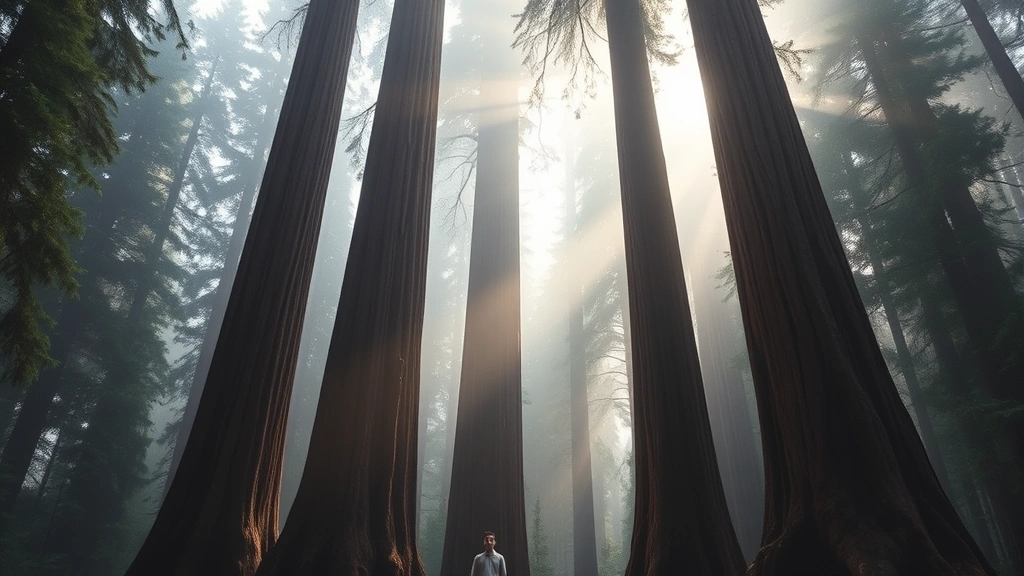
An old growth forest stands as one of nature’s most profound teachers, offering timeless lessons about patience, resilience, and sustainable development. These ancient ecosystems, some reaching ages of hundreds or even thousands of years, embody principles that directly translate to personal growth and self-improvement. When we examine the structure, behavior, and longevity of old growth forests, we discover a blueprint for building a meaningful life that withstands the test of time.
The wisdom contained within these ancient stands goes far beyond environmental science. Old growth forests demonstrate how slow, deliberate progress creates unshakeable foundations. They show us that true strength comes from deep roots, diverse relationships, and the ability to adapt to changing conditions. Whether you’re working on personal growth or seeking to understand what creates lasting success, the old growth forest offers invaluable insights that challenge modern society’s obsession with rapid results and constant productivity.
What Defines an Old Growth Forest
An old growth forest represents a mature ecosystem that has developed over centuries without significant human disturbance. These forests are characterized by large, old trees, complex canopy structures, and abundant deadwood that feeds the forest floor. The definition varies by region and forest type, but generally, old growth forests contain trees that are at least 150-200 years old, with some specimens reaching 1,000+ years in age.
What makes old growth forests unique isn’t simply the age of individual trees. Rather, it’s the intricate web of relationships that develops over extended periods. The forest becomes a multi-layered community where different species occupy distinct niches, creating stability through diversity. This complexity mirrors what we see in successful personal development—it’s not about one dramatic change, but rather the cultivation of multiple skills, relationships, and experiences that create a resilient whole.
The old growth forest teaches us that maturity is a process, not a destination. Just as these forests take centuries to reach their full potential, growth mindset development requires sustained commitment and patience. Understanding this principle fundamentally shifts how we approach self-improvement and goal achievement.
The Power of Deep Roots and Foundations
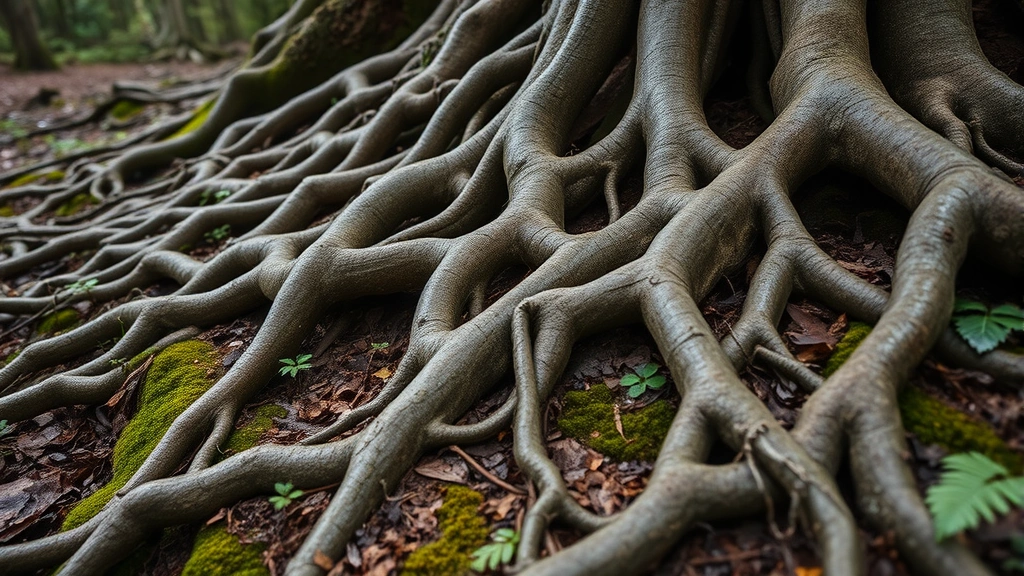
The most striking feature of old growth forests is the extensive root systems that anchor ancient trees. These roots extend far deeper and wider than those of younger trees, creating a network that provides stability, access to water reserves, and nutrient cycling. A tree that has stood for 500 years hasn’t achieved that through luck—it has built an unshakeable foundation.
This principle translates directly to personal development. Before pursuing ambitious goals, we must establish deep roots in core values, fundamental knowledge, and strong relationships. Many people fail in their self-improvement journey because they attempt to build impressive structures on shallow foundations. They want rapid results without investing in the groundwork that creates lasting change.
Consider how this applies to goal setting and achievement. The most successful individuals don’t just set random targets—they first clarify their values, develop core competencies, and build networks of support. These become the roots from which all future growth emerges. When challenges arise, as they inevitably do, those with deep roots remain standing while those built on shallow foundations topple.
The old growth forest demonstrates that investing time in foundational work isn’t boring or unproductive—it’s the most important work you can do. Spend time developing character, learning fundamentals, and nurturing key relationships. This investment pays dividends throughout your entire life.
Key foundational elements:
- Clear personal values and principles
- Core competencies in your field
- Strong relationships and support networks
- Physical and mental health practices
- Financial stability and literacy
Biodiversity and Interconnection
An old growth forest isn’t dominated by a single species. Instead, it contains hundreds or thousands of different organisms, each playing a vital role in the ecosystem’s health. Trees of various ages, shrubs, herbs, fungi, insects, birds, and mammals all interact in complex relationships. Remove one species, and ripple effects cascade throughout the entire system.
This biodiversity creates resilience. If one species faces disease or environmental stress, others compensate. The forest doesn’t collapse when one component fails because the system has built-in redundancy and diversity. Contrast this with monoculture plantations, where a single disease or pest can devastate the entire forest.
The same principle applies to personal development and motivation. People who develop diverse skills, interests, and relationships are far more resilient than those who depend on a single source of fulfillment or income. When one area faces challenges, others sustain you.
Modern culture often pushes specialization to extremes, encouraging people to “pick one thing and master it.” While expertise matters, the old growth forest suggests a better approach: develop depth in one primary area while maintaining breadth across multiple domains. This creates psychological resilience, provides multiple sources of meaning, and increases your adaptability to changing circumstances.
Consider developing competency in:
- Your primary profession or expertise
- Physical health and movement practices
- Creative or artistic pursuits
- Intellectual growth through continuous learning
- Meaningful relationships and community involvement
- Financial literacy and resource management
Resilience Through Adversity
Old growth forests don’t exist in pristine, undisturbed conditions. They’ve survived fires, storms, droughts, insect outbreaks, and disease. The trees bear scars—literal marks of trauma that didn’t destroy them. Some ancient trees have hollow cores where fire has burned out their centers, yet they continue living and growing.
This resilience comes from the forest’s interconnected structure. When one tree falls, others support the ecosystem. Dead trees provide habitat for insects and microorganisms that feed the soil. Fire actually plays a necessary role, clearing debris and returning nutrients. What appears destructive is often part of a renewal cycle.
Research from the American Psychological Association on resilience demonstrates that humans, like forests, can develop tremendous capacity to recover from adversity. The key isn’t avoiding challenges—it’s building the internal and external resources that allow you to navigate them.
Adversity becomes the mechanism through which we develop strength. Every challenge you overcome increases your confidence and capability. The old growth forest doesn’t become resilient by avoiding storms; it becomes resilient by surviving them, adapting to them, and integrating them into its ongoing development.
This reframes how we should approach obstacles in personal growth. Rather than viewing setbacks as failures, recognize them as part of the natural process of becoming stronger and wiser. The scars you carry are evidence of your resilience, not your weakness.
Patience and Long-Term Vision
Perhaps the most challenging lesson from old growth forests is the value of patience. In a culture obsessed with rapid growth, quick wins, and immediate results, the old growth forest operates on a completely different timeline. A tree might spend its first 50 years establishing roots with minimal visible growth. It might take 200 years to reach its full height. Yet this slow start creates the stability for centuries of continued existence.
Many people abandon their personal development efforts because they don’t see immediate results. They expect to transform their lives in 30 days or develop expertise in 90 days. While progress is certainly possible in these timeframes, the deepest transformations require years of consistent effort. The old growth forest teaches that the most valuable achievements are those built slowly, deliberately, and thoughtfully.
Research in behavioral science confirms this principle. Studies on habit formation and skill development show that lasting change requires sustained practice over extended periods. The brain literally rewires itself through consistent repetition over months and years. Quick-fix approaches might produce temporary changes, but they rarely create lasting transformation.
Adopting a long-term vision means:
- Setting goals that extend 5, 10, or 20 years into the future
- Focusing on systems and processes rather than just outcomes
- Celebrating small progress while maintaining patience with the overall timeline
- Understanding that compound growth—small improvements accumulating over time—creates extraordinary results
- Resisting the urge to constantly chase new strategies or shortcuts
The old growth forest that has stood for 500 years didn’t achieve that through dramatic actions. It achieved it through consistent, appropriate responses to its environment, season after season, year after year, century after century.
Lessons for Modern Life
The wisdom of old growth forests directly addresses many challenges of contemporary life. We live in an era of constant stimulation, rapid change, and pressure for immediate results. This creates anxiety, burnout, and a sense of never being “enough.” The old growth forest offers a counternarrative.
First, it legitimizes slowness. You don’t need to optimize every moment or constantly hustle to achieve meaningful progress. Slow, deliberate action sustained over time creates more value than frantic activity. This applies to productivity and professional development, where depth of focus often matters more than quantity of output.
Second, it emphasizes the importance of roots and relationships. In a hyperconnected world, we often overlook the value of deep, local connections. The old growth forest thrives through intricate relationships within its immediate ecosystem. Similarly, your wellbeing depends significantly on the quality of your relationships with family, friends, colleagues, and community. Invest in these connections as seriously as you invest in career advancement.
Third, it reframes resilience. You don’t become resilient by avoiding challenges or creating a perfect environment. You become resilient by facing difficulties, learning from them, and integrating those lessons into your ongoing development. The scars you carry are badges of strength, not marks of failure.
Finally, it suggests that a meaningful life isn’t built on a single achievement or accomplishment. It’s built on diverse engagement with multiple domains of human experience—work, relationships, health, learning, creativity, and contribution. The old growth forest’s strength comes from its diversity, and your life’s richness comes from engaging deeply across multiple areas.
Visiting or studying actual old growth forests can provide profound personal insights. Many people report experiencing clarity, perspective, and renewed sense of purpose when spending time in these ancient ecosystems. The combination of scale, age, and complexity seems to activate something in human consciousness that helps us see our own lives in broader context.

FAQ
What is the oldest old growth forest in the world?
The Great Basin Bristlecone Pine forest in California contains some of Earth’s oldest living organisms, with individual trees exceeding 5,000 years in age. Other ancient forests include the old growth rainforests of the Pacific Northwest and the primordial forests of Southeast Asia. These ancient ecosystems remind us of nature’s capacity for longevity and patience.
How long does it take for a forest to become “old growth”?
This varies by forest type, climate, and location. Generally, a forest requires 150-200+ years to develop old growth characteristics. In temperate rainforests, this process might take 300-500 years. In tropical forests, development can be faster. This extended timeline mirrors human development—true maturity requires decades of experience and growth.
Can old growth forests be replanted or restored?
While young forests can be planted, recreating the complexity and characteristics of true old growth forests takes centuries. This underscores an important principle: some valuable things cannot be rushed. It also emphasizes the importance of preserving existing old growth forests rather than assuming they can be easily replaced.
How do old growth forests contribute to climate regulation?
Old growth forests store vast amounts of carbon in their biomass and soils. They also regulate water cycles, moderate temperature extremes, and provide critical habitat. This demonstrates that long-term investments in foundational systems provide benefits far beyond what’s immediately visible. Your investments in personal development similarly create long-term benefits that extend beyond your individual life.
What specific practices can I adopt to embody old growth forest wisdom?
Develop deep expertise in your field while maintaining diverse interests. Build strong relationships and invest in your community. Practice patience with your own development and trust the compound effects of consistent effort. Embrace challenges as part of your growth rather than obstacles to it. Maintain physical and mental health practices as your foundation. Review your personal growth journey regularly, recognizing how past experiences inform future direction.
How does the old growth forest concept apply to organizations and teams?
Organizations that mirror old growth forest principles—building deep cultures, maintaining diverse talent, investing in long-term relationships with stakeholders, and viewing challenges as learning opportunities—tend to have greater longevity and resilience. Short-term thinking and monoculture approaches create fragility, while diversity and long-term vision create strength.


