
Female Muscle Growth: Inspiring Real-Life Stories That Transform Bodies and Minds
The journey of female muscle growth represents far more than physical transformation—it embodies resilience, determination, and the profound power of self-belief. Women across the globe are shattering outdated myths about strength training, proving that building muscle is not only achievable but transformative for mental health, confidence, and overall quality of life. These real-life female muscle growth stories reveal the psychological and physiological victories that extend far beyond aesthetic changes.
In recent years, the narrative around women and weightlifting has shifted dramatically. What was once considered unfeminine or unattainable is now recognized as a cornerstone of personal growth and empowerment. Women are documenting their transformations, sharing their struggles, and inspiring millions to pick up weights and reclaim their strength. These stories matter because they challenge societal expectations, demonstrate the science of progressive overload, and show that consistency trumps perfection.
Why Female Muscle Growth Stories Matter
Female muscle growth stories serve as powerful catalysts for change in how women perceive their bodies and capabilities. According to research published in the Journal of Sports Sciences, women who engage in resistance training with a growth mindset experience significant improvements in self-efficacy and body image satisfaction. These narratives matter because they:
- Challenge the societal narrative that femininity and strength are mutually exclusive
- Provide evidence-based motivation rooted in real human experience
- Demonstrate that progressive overload works for all body types and starting points
- Show the psychological benefits of consistent training and goal achievement
- Create community and accountability among women pursuing similar goals
When women see others like themselves achieving remarkable transformations, the psychological barrier to entry diminishes significantly. Understanding motivation becomes easier when you have relatable role models demonstrating that the impossible is simply the untried.
From Zero to Hero: Sarah’s 18-Month Transformation
Sarah arrived at the gym at age 28 with zero weightlifting experience and deep-seated insecurity about her body. After years of yo-yo dieting and cardio-only workouts, she weighed 145 pounds at 5’6″ with minimal muscle definition. Her story illustrates how structured progressive training combined with proper nutrition creates lasting transformation.
In her first month, Sarah focused on learning proper form and establishing consistency. She trained three days per week, performing compound movements: squats, deadlifts, bench presses, and rows. Her initial weights were modest—just the bar on many exercises—but her commitment was unwavering. Within six weeks, she noticed her clothes fitting differently and her energy levels improving.
By month six, Sarah had gained 8 pounds of lean muscle while reducing body fat by 3%, resulting in a more defined physique despite the scale showing minimal change. This psychological breakthrough—understanding that weight alone doesn’t reflect progress—transformed her relationship with fitness. She began tracking strength metrics instead of obsessing over numbers on the scale.
At month 12, Sarah was deadlifting 185 pounds (up from 65), squatting 155 pounds (up from 95), and bench pressing 95 pounds (up from just the bar). Her body composition had shifted dramatically: she gained approximately 15 pounds of muscle while losing 12 pounds of fat overall. More importantly, her confidence soared. She reported sleeping better, managing stress more effectively, and feeling genuinely proud of her body for the first time in her adult life.
Sarah’s 18-month journey culminated in a physique transformation that turned heads, but her greatest achievement was psychological: she discovered that she was capable of far more than she’d believed. She now trains five days per week and has become a mentor to other women beginning their strength journeys. Her story demonstrates that consistent effort and proper guidance yield remarkable results.

Overcoming Body Image: Jessica’s Strength Journey
Jessica’s story differs from Sarah’s because her starting point wasn’t about gaining muscle—it was about healing her relationship with her body after years of disordered eating and negative self-talk. At 32, she weighed 118 pounds at 5’4″, technically within a healthy BMI, but she felt weak, fragile, and disconnected from her physical form.
Her therapist recommended strength training not as aesthetic pursuit but as therapeutic practice. Jessica began with beginner classes, focusing on how her body felt rather than how it looked. Within weeks, something shifted. Lifting weights required her to appreciate her body’s functionality—its ability to create force, stabilize loads, and build strength.
Over 14 months, Jessica gained 18 pounds of primarily lean muscle mass, bringing her to 136 pounds. Her body fat percentage decreased despite the scale increase, creating visible muscle definition in her arms, shoulders, and legs. But the physical changes paled in comparison to her psychological transformation.
Jessica reported that strength training became a form of moving meditation. The gym became a safe space where her worth wasn’t tied to appearance but to performance. She set goals—first pull-up, 200-pound deadlift, 100-pound bench press—and achieving each one reinforced her capability and resilience. Inspirational quotes about personal growth adorned her gym mirror, reminding her that building muscle was metaphor for building herself back up.
Jessica’s journey illustrates that female muscle growth stories aren’t always about dramatic before-and-after photos. Sometimes the greatest transformation is invisible: healing from trauma, releasing shame, and reclaiming your body as your own. She now combines strength training with continued therapy, and she advocates for fitness as mental health treatment.
Balancing Motherhood and Muscle: Amanda’s Story
Amanda faced a unique challenge: building muscle while managing the demands of motherhood. At 35, post-pregnancy and post-breastfeeding, she weighed 158 pounds and felt disconnected from her pre-pregnancy strength. With two children under age five, time was her scarcest resource.
Rather than waiting for the “perfect” time, Amanda implemented strategic 45-minute workouts four times per week, training during early mornings before her children woke. She prioritized compound movements that delivered maximum results in minimum time. Her nutrition strategy involved meal prepping on Sundays and focusing on adequate protein intake despite the chaos of young parenthood.
In 16 months, Amanda gained 12 pounds of muscle while losing 14 pounds of fat, bringing her to 156 pounds with significantly improved muscle definition. More importantly, she demonstrated to her children—especially her daughter—that mothers are strong, that fitness is a priority, and that goals are achievable even amidst life’s competing demands.
Amanda’s story resonates with countless women because it’s realistic. She didn’t achieve perfection; she achieved progress. She missed workouts, had weeks of inconsistency, and faced the perpetual guilt of balancing self-care with motherhood. Yet she persisted, and her transformation became a family affair as her children learned to respect her training time and celebrate her achievements.
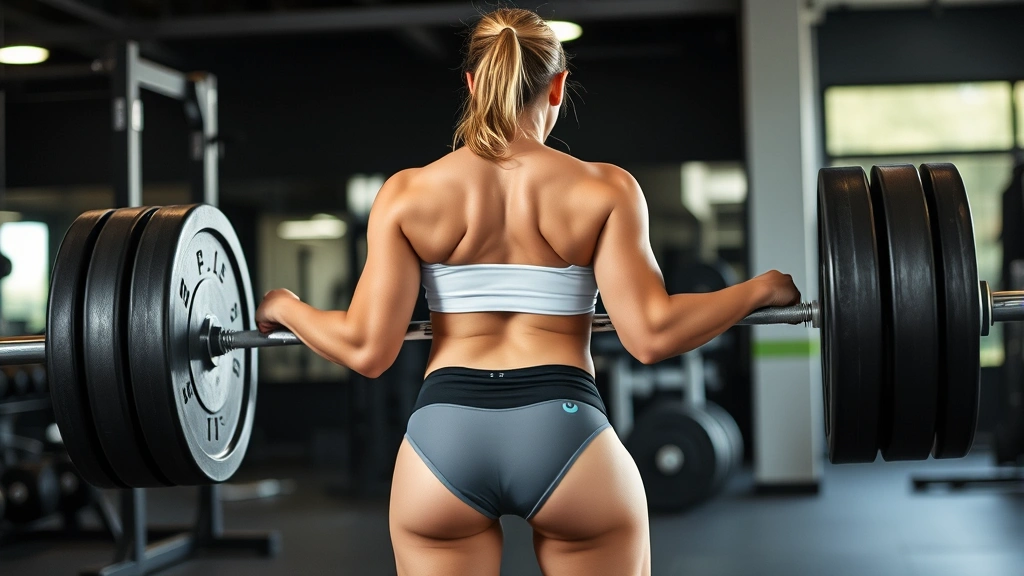
Breaking Through Plateaus: The Science Behind Progress
One common thread in successful female muscle growth stories is understanding how to break through plateaus. Research from the National Center for Biotechnology Information demonstrates that progressive overload—systematically increasing demand on muscles—is essential for continued adaptation and growth.
Female muscle growth plateaus typically occur when training stimulus remains constant. The body adapts to the demands placed upon it, and without increasing challenge, progress stalls. Effective strategies for breaking plateaus include:
- Increasing weight: Adding 2.5-5 pounds to movements, even if it means fewer repetitions initially
- Increasing volume: Adding sets or repetitions while maintaining weight
- Decreasing rest periods: Reducing time between sets increases metabolic stress
- Changing exercise variations: Switching from barbell to dumbbell movements or adjusting angles
- Improving technique: Achieving better mind-muscle connection and range of motion
- Manipulating tempo: Slowing eccentric (lowering) phases to increase time under tension
Women who understand these principles and apply them systematically see continued progress. The American Psychological Association notes that understanding the science behind progress significantly improves adherence and motivation, as women feel empowered rather than confused by plateaus.
Mental Health Benefits Beyond the Gym
Perhaps the most profound aspect of female muscle growth stories is their impact on mental health. Research published in JAMA Psychiatry demonstrates that resistance training reduces symptoms of depression and anxiety as effectively as some pharmaceutical interventions.
Women in muscle-building journeys report:
- Improved mood: Endorphin release and achievement of goals create sustained positive affect
- Enhanced self-efficacy: Proving to yourself that you can achieve difficult goals transfers to other life domains
- Reduced anxiety: The meditative aspects of focused training calm racing thoughts
- Increased resilience: Learning to embrace discomfort in the gym builds mental toughness applicable everywhere
- Stronger sense of control: In uncertain times, having control over your physical development is grounding
- Community and belonging: Gym environments provide social connection and support
Amanda reported that her training became her “therapy hour”—time when she could release stress, focus on something within her control, and emerge feeling capable and strong. Jessica found that the discipline required for muscle building extended to other areas of her life: better sleep hygiene, improved nutrition, and more intentional relationships. Sarah discovered that the confidence gained from strength training made her more assertive at work, leading to a promotion.
These mental health benefits create a virtuous cycle: improved mood increases motivation, which leads to better consistency, which produces better results, which further improves mood. Understanding this cycle—discussed extensively in literature on self-growth—helps women persist through early phases when physical changes are minimal but psychological benefits are already accumulating.
Nutrition and Mindset: Twin Pillars of Success
Every inspiring female muscle growth story includes a nutrition component. Muscle growth requires adequate protein (0.7-1 gram per pound of body weight daily), sufficient calories to support training recovery, and micronutrient density for optimal hormonal function.
However, nutrition extends beyond macronutrients; it’s intertwined with mindset. Women who’ve transformed their bodies often simultaneously transformed their relationship with food. Instead of viewing nutrition through a lens of restriction and punishment, they reframe it as fuel and support for their goals.
This mindset shift is profound. Rather than asking “How little can I eat?” women ask “What do I need to eat to support my goals?” This subtle reorientation eliminates the guilt-shame cycle common in dieting culture. Food becomes functional—a tool for progress rather than a source of moral judgment.
Successful female muscle builders typically:
- Track protein intake consistently to ensure adequate consumption
- Eat in slight caloric surplus during building phases (200-300 calories above maintenance)
- Prioritize whole foods while allowing flexibility for sustainable adherence
- Time protein consumption around training for optimal muscle protein synthesis
- Adjust calories and macronutrients based on progress metrics, not scale weight
- View nutrition as non-negotiable component of training, not separate from it
Research from the International Society of Sports Nutrition confirms that women who combine structured training with intentional nutrition achieve 2-3x greater muscle gains than those who train without nutritional support. The synergy between proper training stimulus and nutritional support is scientifically established.
FAQ
How long does it take to see muscle growth results as a woman?
Most women notice subtle changes within 4-6 weeks of consistent training: improved strength, better fitting clothes, and increased energy. Visible muscle definition typically emerges within 8-12 weeks, with significant transformation occurring by 6 months of consistent effort. However, individual timelines vary based on starting point, genetics, nutrition, recovery, and training intensity.
Will lifting weights make me bulky?
This persistent myth prevents many women from strength training. Building significant muscle requires consistent progressive overload, adequate nutrition (especially protein), and time. Most women find that strength training creates a lean, defined appearance rather than bulk. Women typically have 15-20x less testosterone than men, making rapid muscle gain physiologically unlikely without specific interventions.
What’s the best training split for female muscle growth?
Research supports various approaches. Full-body training 3x weekly works well for beginners, while upper/lower splits (4x weekly) or push/pull/legs (3-6x weekly) suit intermediate trainers. The best program is one you’ll consistently follow. Most successful female muscle builders prioritize consistency and progressive overload over perfect programming.
How important is genetics in female muscle growth?
Genetics influence your ceiling—the maximum muscle you can build—but not whether you can build muscle. Women with unfavorable genetics can still achieve impressive transformations; they simply require longer timeframes. Focus on controllable factors: consistency, progressive overload, nutrition, sleep, and stress management.
Can I build muscle while in a caloric deficit?
Muscle growth is optimized in slight caloric surplus, but research shows women can build muscle while maintaining calories, particularly if they’re new to training or returning from a break. However, fat loss and muscle gain simultaneously (body recomposition) is slower than dedicated phases. Most successful transformations involve building phases (slight surplus) alternating with cutting phases (slight deficit).
How does hormonal cycle affect female muscle growth?
Menstrual cycle influences strength, recovery, and appetite. Research shows strength peaks during follicular phase (days 1-14). Some women adjust training intensity accordingly, while others find consistency matters more than optimizing for cycle phases. Tracking your personal response and adjusting training accordingly is more valuable than following general recommendations.


