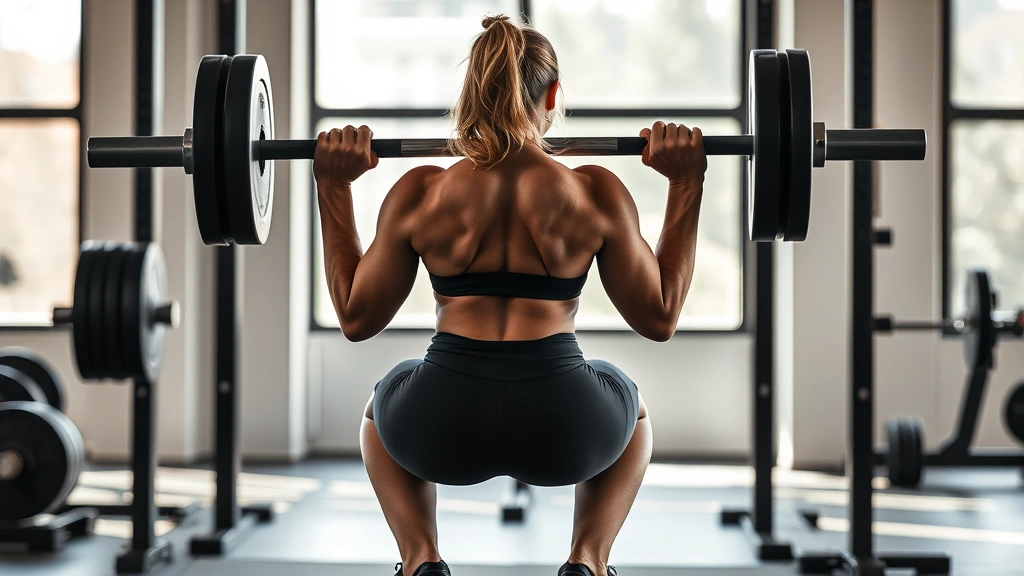
Female Muscle Growth: Trainer Tips & Science-Backed Strategies
The female muscle growth game has transformed dramatically over the past decade. Women are breaking through outdated myths about strength training, discovering that building lean muscle is not only possible but profoundly empowering. Whether you’re looking to increase your strength, boost your metabolism, or simply feel more capable in your body, understanding the science behind female muscle development is your first step toward sustainable results.
Many women hesitate to lift weights, fearing they’ll become bulky or masculine. This misconception has held back countless individuals from experiencing the transformative benefits of resistance training. The truth? Women have significantly lower testosterone levels than men—approximately 15-20 times less—which makes it biologically challenging to develop the same muscle mass. What women can achieve, however, is lean, defined, functional muscle that enhances athletic performance, increases metabolic rate, and builds unshakeable confidence.
This comprehensive guide combines cutting-edge research with practical trainer wisdom to help you optimize your female muscle growth journey. We’ll explore the physiological differences, evidence-based training protocols, nutrition strategies, and mindset shifts that separate casual gym-goers from women who truly transform their physiques.

The Science of Female Muscle Development
Understanding how your body builds muscle at the cellular level transforms your approach to training. Muscle hypertrophy—the process of muscle fiber enlargement—occurs through the same mechanisms in women as men, but at different rates due to hormonal differences. When you perform resistance training, you create microscopic tears in muscle fibers. During recovery, your body repairs these tears by synthesizing new protein, resulting in stronger, larger muscles.
Research published in Sports Medicine demonstrates that women can achieve similar relative strength gains as men, though absolute muscle mass development proceeds more gradually. This doesn’t mean slower progress—it means sustainable, quality gains that last.
Estrogen plays a crucial role in female muscle development. Rather than inhibiting muscle growth, estrogen enhances muscle recovery, reduces inflammation, and improves blood flow to working muscles. Women also experience hormonal fluctuations throughout their menstrual cycle, with follicular phases (lower estrogen) potentially offering advantages for maximal strength training, while luteal phases support metabolic flexibility.
The key insight from sports science: women need the same training stimulus as men to trigger muscle growth. This means lifting heavy weights relative to your current capacity, not just performing endless repetitions with light dumbbells. Your personal growth journey in the gym mirrors your broader development—it requires progressive challenge.

Progressive Overload: Your Most Powerful Tool
Progressive overload is the non-negotiable principle that separates women who build muscle from those who merely go through the motions. Progressive overload means consistently increasing the demands placed on your muscles over time. This can happen through increased weight, additional repetitions, reduced rest periods, improved range of motion, or enhanced exercise technique.
Most women fail to build muscle not because their bodies can’t, but because they don’t challenge themselves adequately. Lifting the same 10-pound dumbbells for six months produces minimal adaptation. Your muscles respond to progressive stimulus by growing stronger and larger. Track your workouts meticulously. Note the weight used, repetitions completed, and how the exercise felt. This data becomes your roadmap.
An evidence-based approach involves training each muscle group 2-3 times per week with progressive overload. A practical example: Week 1, you perform 3 sets of 8 barbell squats at 115 pounds. Week 2, you aim for the same weight but 9 repetitions. Week 3, you increase to 120 pounds for 8 repetitions. This systematic progression triggers continuous adaptation without overwhelming your nervous system.
The psychological dimension matters enormously. Growth mindset principles apply directly to strength training. Women who view challenges as opportunities rather than threats show greater persistence and superior long-term results. Every set where you approach muscular failure represents a growth opportunity, not a limitation.
Nutrition Fundamentals for Muscle Building
You cannot build muscle in a caloric deficit, yet you cannot build optimal muscle in excessive surplus either. The female muscle growth game requires nutritional precision. Aim for a modest caloric surplus of 250-500 calories above your maintenance level. This provides sufficient energy for training intensity and muscle protein synthesis without excessive fat gain.
Protein intake is paramount. Research from the Journal of Strength and Conditioning Research indicates that women should consume 1.6-2.2 grams of protein per kilogram of body weight daily to optimize muscle growth. For a 140-pound woman, this translates to approximately 100-140 grams of protein daily, distributed across 3-4 meals.
Quality protein sources include:
- Lean meats (chicken breast, turkey, lean beef)
- Fish and seafood (salmon, tuna, cod)
- Eggs and egg whites
- Greek yogurt and cottage cheese
- Legumes and plant-based options
- Quality protein supplements
Carbohydrates fuel your training and support recovery. Women often under-consume carbs due to outdated diet culture messaging. Your muscles run on glycogen, a carbohydrate derivative. Inadequate carbohydrate intake compromises workout performance and recovery. Consume 4-7 grams of carbohydrates per kilogram of body weight daily, depending on training intensity.
Healthy fats support hormonal function and nutrient absorption. Aim for 0.8-1.2 grams per kilogram of body weight from sources like avocados, nuts, seeds, olive oil, and fatty fish. Micronutrient sufficiency matters tremendously. Iron, zinc, vitamin D, and B vitamins all influence muscle protein synthesis and recovery capacity.
Optimal Training Splits and Frequency
The optimal training split for female muscle growth emphasizes compound movements and adequate volume. A time-tested approach is the upper/lower split, training each pattern twice weekly:
Upper Body Day:
- Barbell bench press or dumbbell variation: 4 sets of 6-8 reps
- Barbell row or machine row: 4 sets of 6-8 reps
- Overhead press: 3 sets of 8-10 reps
- Chest-supported row or lat pulldown: 3 sets of 8-10 reps
- Dumbbell curls and tricep extensions: 3 sets of 10-12 reps
Lower Body Day:
- Barbell back squat or goblet squat: 4 sets of 6-8 reps
- Romanian deadlift or conventional deadlift: 4 sets of 6-8 reps
- Leg press or Bulgarian split squat: 3 sets of 8-10 reps
- Leg curl or hamstring machine: 3 sets of 10-12 reps
- Calf raises: 3 sets of 12-15 reps
This frequency ensures each muscle group receives adequate stimulus twice weekly while allowing sufficient recovery. Rest days between sessions matter—your muscles grow during rest, not during training. This connects to broader self-improvement principles where recovery and reflection enable progress.
Compound movements—exercises involving multiple joints and muscle groups—should dominate your training. Squats, deadlifts, presses, and rows build functional strength and trigger systemic hormonal responses that support muscle growth. Isolation exercises complement compound work but shouldn’t form your foundation.
Recovery and Hormonal Optimization
Female hormonal fluctuations create unique recovery considerations. Your menstrual cycle influences recovery capacity, strength levels, and injury risk. Research in Frontiers in Physiology demonstrates that training intensity and volume can be periodized around the menstrual cycle for enhanced results.
During the follicular phase (menstruation through ovulation), estrogen rises and injury risk decreases. This is optimal timing for maximal strength work and introducing new exercises. During the luteal phase (ovulation through menstruation), progesterone rises, creating increased energy expenditure and potentially elevated perceived exertion. Maintain intensity but consider slightly higher volume with moderate weights.
Sleep represents your most powerful recovery tool. During deep sleep, your body releases growth hormone and manages cortisol—a stress hormone that, in excess, inhibits muscle protein synthesis. Aim for 7-9 hours nightly. Sleep deprivation impairs muscle growth, increases injury risk, and undermines your female muscle growth game entirely.
Stress management influences recovery profoundly. Chronic stress elevates cortisol, which catabolizes muscle tissue and promotes fat storage. Incorporate stress-reduction practices: meditation, yoga, nature exposure, or hobbies you enjoy. Your personal growth quotations should remind you that rest and recovery are productive, not lazy.
Hydration supports nutrient transport and temperature regulation during training. Drink at least 3-4 liters of water daily, more on training days. Consider electrolyte supplementation if you train intensely or live in hot climates.
Common Mistakes Women Make
Mistake #1: Insufficient Training Intensity
Many women perform high-repetition, light-weight exercises believing this prevents bulk. This approach doesn’t trigger sufficient mechanical tension for muscle growth. Aim for sets where the final 1-2 repetitions feel challenging. If you could perform 10 more reps, the weight is too light.
Mistake #2: Excessive Cardio Volume
While cardiovascular training supports health, excessive steady-state cardio creates a catabolic environment that conflicts with muscle building. Limit moderate-intensity cardio to 2-3 sessions of 20-30 minutes weekly. Prioritize resistance training for muscle growth goals.
Mistake #3: Inadequate Protein Consumption
Women often consume insufficient protein due to calorie consciousness. This directly impairs muscle protein synthesis. Hit your protein targets consistently—this is non-negotiable for the female muscle growth game.
Mistake #4: Inconsistent Training
Muscle growth requires sustained stimulus over months and years. Sporadic training produces sporadic results. Commit to a structured program for at least 12 weeks before evaluating results. Consistency beats perfection.
Mistake #5: Ignoring Progressive Overload
Without tracking progression, you unconsciously plateau. Maintain detailed records. Progressive overload is the bridge between effort and results.
Mistake #6: Neglecting Mental Game
Your mindset determines persistence. Early experiences shape your beliefs about capability, but these beliefs can be rewritten through evidence of progress. Each workout proves you’re capable of more than you believed.
FAQ
How long does it take to see muscle growth results as a woman?
Visible muscle changes typically appear within 6-8 weeks of consistent training with progressive overload and proper nutrition. Significant transformation requires 12-16 weeks minimum. Strength improvements often precede visible muscle gain by several weeks.
Will lifting heavy weights make me bulky?
No. Building muscle requires sustained caloric surplus, progressive overload, and consistent training. Women naturally build muscle more slowly than men due to hormonal differences. Most women who lift heavy develop lean, defined physiques rather than bulky appearance.
What’s the best time to train during my menstrual cycle?
The follicular phase (lower hormone levels) is optimal for maximal strength work. The luteal phase supports higher volume training. However, consistency matters more than perfect timing. Train when you can maintain adherence.
Do I need supplements to build muscle?
No. Whole foods provide adequate nutrients. Protein powder offers convenience, not superiority. Creatine monohydrate has strong research support for muscle growth and is safe for women. Multivitamins address potential micronutrient gaps.
How much weight should I be lifting?
Choose weights where you reach muscular fatigue within your target rep range. For 6-8 reps, the final rep should be challenging. For 10-12 reps, you should have 1-2 reps remaining. This varies individually—compare yourself only to your previous performance.
Can I build muscle while losing fat?
Yes, particularly if you’re new to training or returning after a break. Maintain adequate protein, strength train consistently, and eat at a slight deficit (250-500 calories below maintenance). This body recomposition approach builds muscle while reducing fat simultaneously.
What role does genetics play in female muscle growth?
Genetics influence baseline muscle-building capacity, but training and nutrition dominate results. Women with different genetic predispositions can all build impressive muscle through consistent effort. Genetics determine your ceiling, not your starting point.


